
 Members

This year marks the tenth anniversary of the founding of the CSF Leak Association.
It is remarkable to think that a full decade has passed since a small group of CSF leak sufferers and family members came together to establish Europe’s first charity dedicated to spinal CSF leaks. This important anniversary offers a welcome opportunity to pause and reflect on just how far we have come.
For those of you who do not know me, my name is David Baldwin, and I am extremely proud to have been both a founding trustee and the first Chair of the CSF Leak Association. While I stepped down from the Board shortly before the birth of my son in 2020 so I could focus on being a father, the charity has always held a very special place in my heart and its establishment was deeply personal.
As is the case for so many of us, I had never heard of a cerebrospinal fluid (CSF) leak when I was unlucky enough to suffer one, yet the life-changing impact of this previously unknown condition was profound. It was in 2013, following a white-water kayaking trip one evening after work, that I sustained my leak. In most respects it was a completely normal trip to the River Garry near Loch Ness in the Scottish Highlands, a river that I had paddled many times before. But after suffering what felt like a whiplash-type injury, I knew something was wrong, although I could not quite put my finger on it. At the time I could never have imagined what would unfold over the weeks, months and years that followed.
It was not until the next day that the real gravity of the situation hit me, and it hit like an express train. I woke up unable to sit or stand without experiencing excruciating pain in my head. Simply getting to the toilet involved crawling and once there I had to sit with my head below my knees for fear that the pain would make me vomit. Having never experienced significant headaches in the past, I knew something was not right, but at the time I still assumed it was “just a headache”. I took some paracetamol and went to work.
I pushed on as best I could, but by lunchtime I could manage no longer and left early, which was almost unheard of for me, especially for someone who had barely missed a day of school or work in his life. I stood at the railway station waiting for the train home feeling as though I was drunk, disorientated, my vision blurring, my ears ringing and my head in severe pain. I noticed that lowering my head beneath my shoulders seemed to ease things slightly, but I had absolutely no idea why.
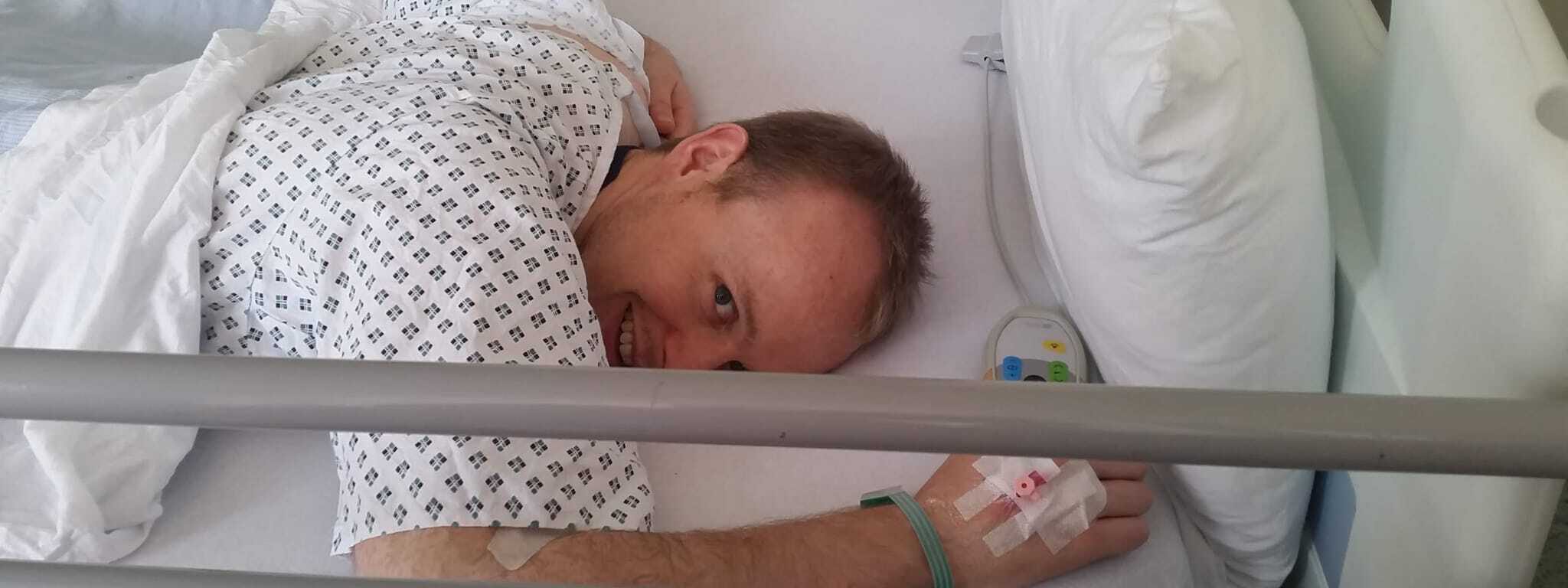
What followed was an experience familiar to so many CSF leak sufferers: a life-changing, life-limiting and incredibly traumatic ordeal. For a long period of time I was largely bed- and house-bound, unable to work, unable to socialise and often unable even to look after myself. I was misdiagnosed, treated for unrelated and incorrect conditions and left waiting on NHS lists, desperately trying to manage the debilitating symptoms of what was eventually diagnosed as spontaneous intracranial hypotension, all while watching my life, my hopes and my dreams slip through my fingers. It was the lowest point in my life and one that I would not wish upon anyone.
At the time, awareness of spinal CSF leaks in the UK was extremely limited. The condition was poorly recognised, often dismissed, frequently misidentified and many clinicians had little experience of diagnosing or treating it. Some doctors did not even believe it was possible to have a persistent CSF leak or that you might still be able to sit or stand, even briefly, if you did. I faced colossal hurdles simply in being believed and obtaining a diagnosis, let alone receiving appropriate and effective treatment. And I was far from alone in that.
It quickly became clear that the system was not set up to recognise or manage patients like me and the default “conservative measures first” approach left me lying alone in my bedroom staring at the ceiling for months on end with absolutely no improvement in my condition and a rapid decline in almost every other area of my life, not least my job, my career and my relationships.
I turned to the internet for help but, to my horror, typing “CSF leak” into Google returned very few results, most of which related to cranial rather than spinal leaks. To put it mildly, it made my heart sink and left me feeling lost and with nowhere to turn.
However, having never been one to take things lying down, I was determined that this would not be the point where my world stopped spinning. I had already weathered a heart condition in my twenties and I had made a career out of planning and problem solving. Doing nothing was not an option.
Out of that experience came a determination that those who followed should not have to face the same situation. While I could not wave a magic wand and change what had happened to me or the experiences I had endured, I could take control of what felt like an overwhelming and uncertain situation by channelling my energy and time into creating a charity that could do the heavy lifting at a higher level and for as many people as possible, advocate for patients and help drive meaningful change.
That vision, which I shared with a number of others in the community, led to the founding of the CSF Leak Association ten years ago. The aim was straightforward but ambitious: to raise awareness of spinal CSF leaks, support patients navigating an often confusing and isolating condition, encourage progress in diagnosis, research and treatment and ultimately secure a clear and consistent treatment pathway for patients. From the outset it was always intended that the organisation would work not only to improve understanding within the UK but also contribute to progress across Europe and the wider world, irrespective of its humble beginnings.
After much planning, the Association was formally established and registered as an official charity in 2016. Once we were up and running, one of our first steps was to updatea website called CSFLeak.info, which I had established in 2013 shortly after sustaining my leak, rebranding it as the new charity’s focal point and shop window. We worked with a small team of doctors, including Wouter Schievink, Manjit Matharu, James Walkden and Linda Gray, to review, update and expand the information and guidance available on the site.
“For many, discovering that they are not alone and that reliable information and support exist can make an enormous difference during an otherwise frightening and isolating time.”
Work also began on developing printed and downloadable leaflets, infographics and other resources aimed at helping new patients understand the condition and giving them something trustworthy that they could take to GPs and other professionals when advocating for the care and treatment they required.
As we built up a head of steam we began to get interest from journalists, first local newspapers, then BBC Scotland News, BBC Radio Scotland’s Kaye Adams programme followed soon after and at one point a story about my own leak experience was the second most read article on the entire BBC News website. It really felt as if we were getting somewhere.
It wasn’t easy, though, and our pace was often checked by our health. Board meetings were held via Skype with attendees lying flat on their backs, with rest breaks to allow people to recuperate before moving to the next item on the agenda. Publications and newsletters were produced while lying in bed with computers rigged on Heath Robinson gantries dangling precariously above faces. Television and radio interviews were carried out by people lying on the floor and conferences were attended by people who had to lie down right up until the point at which they had to present.
It was early days, but we covered a huge amount of ground in a relatively short space of time. We opened up to membership towards the end of the first year and passed 100 members sooner than any of us could have imagined. Our website amassed hundreds of thousands of views and we were overwhelmed by the support shown by the wider CSF leak community.
We understood that we needed to be flexible and adapt to a new or adapted way of working so that the CSF leak tortoise could ultimately win the race. It was not easy for any of us, but we all understood that if CSF leak sufferers did not push for change, change was unlikely to happen quickly.
I cannot stress enough how much of a Herculean effort was made by an extremely small number of people, all but one of whom had an active CSF leak, in those early days to get the charity off the ground. Without those individuals the CSF Leak Association as an organisation, and the representation of CSF leaks within the NHS itself, would simply not be anywhere near as far forward as it is today.
Looking back over the past decade, the progress that has been made is both encouraging and humbling. The Association has grown into a respected voice for patients affected by CSF leaks and spontaneous intracranial hypotension. Through patient support, educationand collaboration with clinicians we have helped bring the condition into wider professional and public awareness across the UK.
Just as importantly, the charity has provided a lifeline for many patients and families who suddenly find themselves facing a condition they have never heard of and struggling to navigate a complex healthcare system. For many, discovering that they are not alone and that reliable information and support exist can make an enormous difference during an otherwise frightening and isolating time.
None of this would have been possible without the extraordinary commitment of the many people who have given their time and expertise to the charity.
I would like to extend my sincere thanks to every trustee who has served on the Board since our founding, as well as the many volunteers who have supported the organisation in countless ways. Their dedication, professionalism and compassion have been central to everything the charity has achieved.
I am also deeply grateful to the doctors and specialists who have served on the Association’s Medical Advisory Committee and in our special interest groups which have helped develop treatment pathways, draft critical guidelines and are now working on the next projects, including a patient registry. Their willingness to share their time and knowledge, guide our work and engage constructively with the patient community has played a vital role in advancing understanding of this condition within the UK. Without their involvement, progress would have been immeasurably slower.
The success of the charity’s work to date stands as a powerful example of what can be achieved when patient-led organisations and medical professionals come together with a shared interest and a common goal. By combining lived experience with clinical expertise, meaningful and lasting progress can be achieved for the benefit of patients.
“The success of the charity’s work to date stands as a powerful example of what can be achieved when patient-led organisations and medical professionals come together with a shared interest and a common goal.”
A particularly important milestone during the past decade has been the development and adoption of the world's first multidisciplinary treatment guidelines for spontaneous intracranial hypotension. The publication of these guidelines represents a significant step forward in improving consistency of care and recognition of the condition. It reflects years of work by dedicated clinicians and researchers, and the Association is proud to have supported and advocated for progress in this area.

While much has been achieved, our work is far from complete. Many patients still face long diagnostic journeys and further improvements in access to specialist care, imaging and treatment remain essential. However, compared with where we began ten years ago there is now a far stronger foundation of awareness, collaboration and expertise on which to build.
On this tenth anniversary, I would again like to thank everyone who has been part of the Association’s journey so far: trustees, volunteers, clinicians, researchers and above all the patients and families who have shared their experiences and helped drive change.
Together, we have made significant and meaningful progress and, as a community, we stand in a far stronger position today than we did a decade ago. The landscape for CSF leak patients has changed profoundly in that time. In many respects the CSF leak landscape is almost unrecognisable from what it was when I first became ill in 2013.
I look forward with optimism to the continued work ahead in improving recognition, understanding and treatment of CSF leaks in the United Kingdom and beyond. The work is not finished, but the progress of the past decade shows clearly what can be achieved when patients, clinicians and researchers work together with a shared purpose.
As for me, following two major spinal surgeries, sixteen extradural blood and glue patches, eight CT myelograms, two digital subtraction myelograms, radionuclide cisternography and more tests and investigations than I care to remember, my health is now the best it has been in the thirteen years since my CSF leak journey began. Along the way I was also blessed to welcome my son, Calum, into my life - a wee boy who has given me more purpose and drive than he will ever know.
For many years I believed that my CSF leak had ended my dreams of becoming a fatheramong so many others, but that dream endured. Now, at five years of age, Calum has just completed his first fundraising run for the CSF Leak Association. If there was hope that things could improve for me and that my dreams could still become a reality, there is without question hope that they can improve for you too and that your own dreams can still be realised.
When life seems impossibly dark, never lose hope. No matter where we find ourselves, hope is one of the few things we still wield agency over and it is the light that leads us forward.
Thank you.

 Become a Member
 Online Store
 Donate
 Volunteer